Why Refer Patients to Lenire Clinics?
Evidence Based and Expert Led Tinnitus Care

Expert Tinnitus Network
Lenire has an accessible network of leading tinnitus care clinics in Europe and the UK.
Tinnitus Research Leaders
Neuromod, creators of Lenire, are at the forefront of clinical trial and real world tinnitus research.
Satisfied Patients
83% of Lenire clinical trial participants would recommend Lenire to treat tinnitus.

How Does the Lenire Tinnitus Treatment Device Work?
Watch to learn how a custom combination of audio and tongue stimulation (dual mode) can soothe tinnitus.
Lenire Media Coverage
The Washington Post, CBS, NPR, Good Morning America, AARP and more major media outlets have featured Lenire.

Lenire Tinnitus Patient Stories

Lenire Helped Me Do Things I Couldn’t Do Before
“It was like getting life back.”
Ola Göransson, Patient at AudioTeket Stockholm
Lenire Patient Stories
Lenire Helped Bert Stay Airborne
“Lenire is a game-changer. It is what I had been waiting for.”
Bert, Patient at Peachtree Hearing
Lenire Patient Stories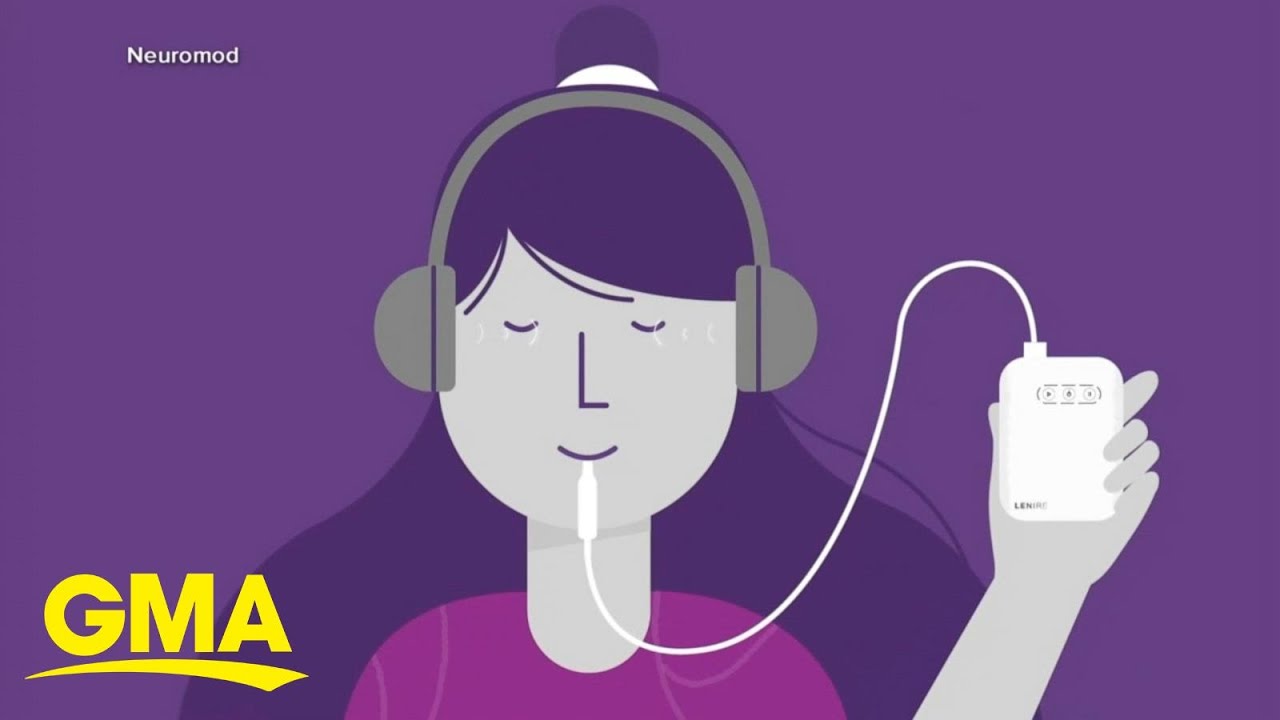
Lenire Helped Christina Sleep and Return to Work
“I sleep much better. I’m back to my normal sleeping habits. I’ve definitely got my life back, I got back to work. It was really good to get back to my old me.”
Christina, US Patient
Lenire Patient StoriesSafe and Effective Relief from Tinnitus
Proven in clinical trials and with real world patients.

Sustained Relief
91% of TENT-A2 clinical trial patients reported relief from tinnitus that sustained for at least 12-months. 2

Real World Results
91.5% of 220 patients reported significant relief from tinnitus in a peer-reviewed and published real world patient review. 5

Controlled Trial
Lenire’s bimodal neuromodulation outperformed sound-only therapy for patients with moderate or worse tinnitus. 3
Referring Healthcare Professional FAQs
-
Is Lenire an Effective Tinnitus Treatment?
Lenire’s bimodal neurmodulation is proven to be an effective tinnitus treatment. Clinical trial data and real world evidence support Lenire’s effectiveness.
- TENT-A1 Clinical Trial: 80% of patients experienced a significant reduction in tinnitus severity that sustained for at least 12 months.
- TENT-A2 Clinical Trial: 91% of patients reported a significant reduction that sustained for at least 12-months.
- Controlled TENT‑A3 Trial: 70% of patients with moderate or worse tinnitus achieved clinically meaningful improvement with Lenire, compared to minimal changes with sound-only therapy. Sound-therapy was TENT-A3’s control.
- Peer-Reviewed Real World Data: 220 patients showed that 91.5% had significant relief after 12 weeks of treatment. This is consistent with clinical trials.
Patients typically use Lenire at home for two 30-minute sessions per day, for a period recommended by their qualified audiologist. Lenire’s unique bimodal neuromodulation approach – combining auditory stimulation with gentle electrical stimulation of the tongue – leverages neuroplasticity to retrain the brain’s response to tinnitus.
-
Are Tinnitus Patients Satisfied with Lenire?
83% of Lenire’s clinical trial participants would recommend Lenire to treat tinnitus. This is a strong indicator of Lenire’s efficacy and patient satisfaction.1
Lenire Partners are selected based on the expertise in treating tinnitus patients. So, in addition to the groundbreaking at-home tinnitus treatment device, your patients benefit from the best possible care for tinnitus patients available.
-
Is Lenire Safe for Patients to Use At-Home?
Lenire’s safety has been clinically trialed with 600 patients with no serious adverse side effects reported.3 As a result, Lenire is a reliable treatment option for patients seeking a non-invasive treatment option.
-
Where Can I Refer to a Lenire Provider?
Lenire is available through certified hearing care professionals with tinnitus expertise in the United Kingdom, Europe, and the USA. You can find a clinic to refer your patients to using Lenire’s Interactive Clinic Map.
-
How Will Referring Lenire Support My Clinic?
Healthcare professionals who have access to Lenire’s network of tinnitus care experts can offer their patients the best possible treatment options guided by industry-leading expertise.
- Confidence in Care: 15% of the global adult population is living with tinnitus. Understanding tinnitus and tinnitus treatment options increases tinnitus patient satisfaction.
- Support Ageing Patients: Tinnitus disproportionately people of retired age due to age-related hearing loss. As your patient base ages, understanding the latest treatment options for tinnitus will help your clinic continue to support your patients as they age.
- Reduce Recurring Visits: Tinnitus patients have complex needs that often go beyond treatment options. As a result, healthcare professionals will often see tinnitus patients more than once. Referring tinnitus patients to an expert-led treatment pathway offers them relief while reducing recurring visits for single issues.
If you’re are deciding where to refer tinnitus patients, Lenire’s network of expert tinnitus clinics will ensure that your patients receive the best care and the latest evidence-based treatment options.
1. TENT-A1 Conlon et al., Sci. Transl. Med. 12, eabb2830 (2020)
2. TENT-A2: Conlon et al., Different bimodal neuromodulation settings reduce tinnitus symptoms in a large randomized trial, Sci Rep.
3. TENT-A3: Clinical trial data in preparation for independent publication: clinicaltrials.gov/ct2/show/NCT05227365.
4. Aggregate: TENT-A1, TENT-A2, TENT-A3 aggregate clinical trial results.
5. McMahan, E.E., Lim, H.H. Retrospective chart review demonstrating effectiveness of bimodal neuromodulation for tinnitus treatment in a clinical setting. Commun Med 5, 112 (2025). https://doi.org/10.1038/s43856-025-00837-3
Note 1: All statistics based on compliant patients. Patient compliance criteria is detailed in Lenire’s clinical trial design.
Note 2: TENT-A1/TENT-A2 were not considered by the United States of America FDA as part of Lenire’s FDA Grant and, as such, applies solely to outside the US.