Clinical Trials for Tinnitus Treatments

It is estimated that 10 – 15% of the adult population live with tinnitus.1 Despite the high number of people living with chronic tinnitus, there are few tinnitus treatment options.
There are those who can benefit from tinnitus retraining therapy (TRT). This is a form of cognitive behavioral therapy (CBT) that is designed for tinnitus. What are the options for those who cannot get relief from tinnitus with TRT?
There are hearing aids for tinnitus, tinnitus noise masking, and tinnitus supplements. However, clinical trials for tinnitus treatments like these are limited in scope, or have questionable findings.
This is why there are few FDA Approved tinnitus treatment options.
This post will explore tinnitus, clinical trials for tinnitus treatments, and clinical trial designs and how trials are controlled.
Clinical Trials for Tinnitus Treatments Table of Contents
- What is Tinnitus?
- What are Clinical Trials?
- What is a Placebo?
- Why is Clinical Trial Blinding Important?
- What is Suprathreshold Stimulation?
- Common Clinical Trial Designs for Medical Devices
- Lenire Clinical Trial Design
- Regulatory Approval and Independent Review
- Clinical Trials for Tinnitus Treatments Conclusion
What is Tinnitus?
Tinnitus is when a person hears constant noise when there is no external sound. Tinnitus is most often known as ringing in the ears. However, tinnitus can also sound like buzzing, hissing, whooshing, and many other sounds.
Tinnitus typically falls into two types – objective tinnitus and subjective tinnitus.
- Objective Tinnitus is tinnitus that your doctor can measure during an exam. This rare type of tinnitus may be caused by problems like blood vessel or ear muscle issues.
- Subjective Tinnitus is tinnitus that only the person with tinnitus can hear. There is no objective measure for subjective tinnitus. Subjective tinnitus is the most common type of tinnitus. An estimated 99% of all tinnitus cases are subjective.
Lenire is a bimodal neuromodulation device. Lenire has been proven in clinical trials to be a safe and effective subjective tinnitus treatment device. What exactly are clinical trials and why are they important?

What are Clinical Trials?
Clinical trials are a type of research that studies new treatments. Treatments can include medical, surgical or behavioral interventions such as drugs, diets, and devices.
Clinical trials evaluate the effect of new treatments on human health. Specifically, clinical trials test the safety and effectiveness of treatments on a condition. As an example, Lenire’s clinical trials tested how effective the device was at treating tinnitus.
Participants in clinical trials are typically volunteers. They volunteer to advance medical research for the condition they live with. They also feel like they are an active participant in their own health. Volunteering is essential as payment can bias a clinical trial. The most common questions that arise following clinical trials are:
- Is the treatment effective? Is the treatment more effective than a placebo?
- Was it a controlled clinical trial?
- Was it a blinded clinical trial?
Typically a placebo and blinding are clinical trial controls. But what exactly is a placebo? Are placebo and blinding in clinical trials necessary?
What is a Placebo?
A placebo is a fake treatment that does not benefit a condition. In pharma, a placebo is commonly a sugar pill. The Placebo Effect is when a patient thinks they are gaining a therapeutic effect from a placebo when they are not.
Some medical devices, however, cannot use a placebo control. Instead, medical devices use a sham control. A sham control is when one group in a clinical trial is given the active treatment or procedure. The control group is often given a simulated treatment or procedure.
Placebo and sham controls both aim to help researchers answer: Is the treatment benefiting patients, or has the patient’s brain convinced them they are responding to placebo?
- Knee Surgery Placebo Example: A recent surgery study involved 180 patients with severe knee pain. Even the strongest painkillers could not relieve the pain. A surgeon gave half of the patients real knee surgery, and others placebo knee surgery. The placebo surgery was a small incision on the knee without any surgery. During the placebo, the surgeon spoke as if he was performing the surgery. The trial found that the placebo surgery provided as much relief patients as the real surgery.
In both placebo and sham controls, participants are most often unaware if they are receiving an active treatment or placebo. This is known as blinding.
Why is Clinical Trial Blinding Important?
Blinding aims to remove bias from clinical trials from participants and researchers. There are two types of blinding:
- Single blinding is when clinical trial patients do not know which group is receiving active or placebo treatment.
- Double blinding is when neither clinical trial patients or researchers know which group is receiving active or placebo treatment.
If a control group was aware they were receiving an active or placebo treatment, their response may be biased. As well as this, researchers can be biased if they are not blinded. Lack of blinding can lead to inaccurate data and potentially inaccurate trial conclusions. This is why blinding is a critical aspect of the clinical trial process.
However, blinding with some medical devices can be challenging. While dummy devices can be used to simulate treatment, there are many medical devices where dummy device blinding is not possible. Even if it is possible, it may not be practical.
Why is blinding not possible with some medical devices? A dummy device must simulate the active medical device’s treatment. This is often not possible when the medical device uses suprathreshold stimulation.

What is Suprathreshold Stimulation?
Suprathreshold stimulation is when a patient can physically feel the treatment. A patient will become aware that they are using a dummy if it cannot mimic the trialed medical device’s suprathreshold stimulation.
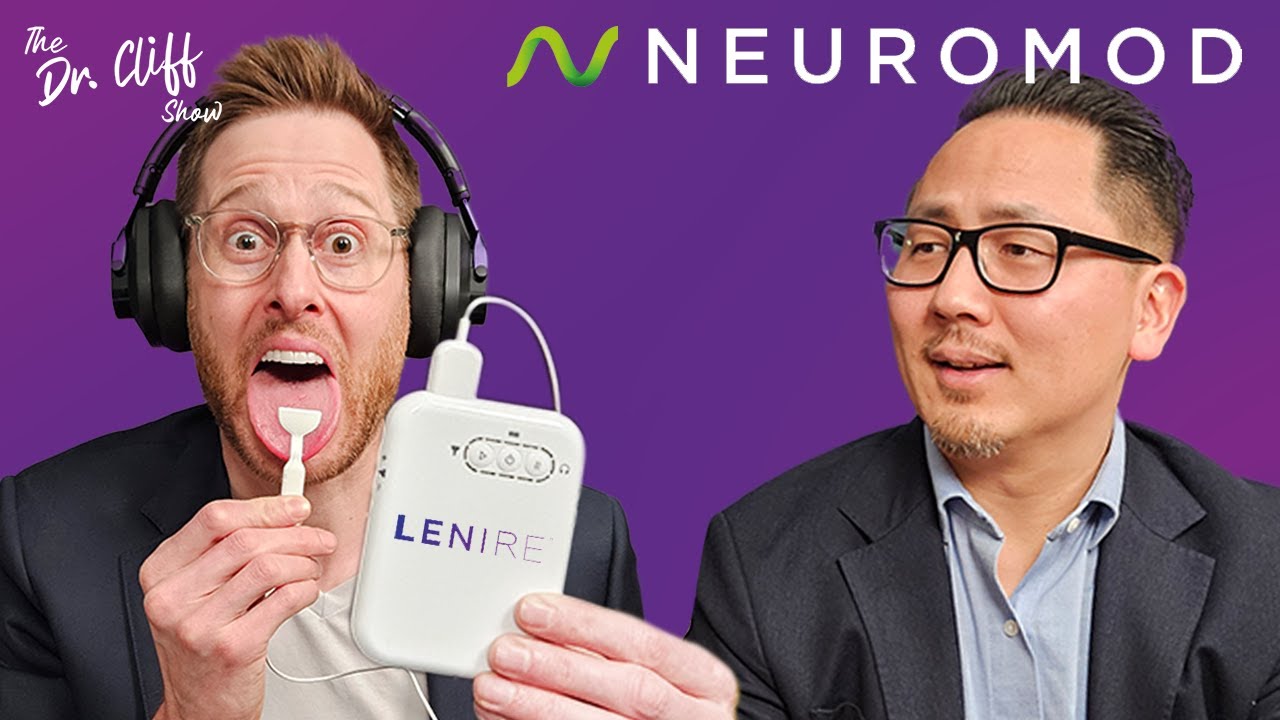
- Example: Lenire combines sound and tongue stimulation. Patients can hear the audio and they can feel pulses on their tongue. If a patient was given a dummy with no audio or pulses to the tongue, they would be aware the device was a dummy. As a result, the trial would be compromised.
Placebo, sham, and blinding are critical factors when capturing reliable trial data. That said, these options are not practical in many clinical trials for tinnitus treatments, such as devices like Lenire. So, what are the alternative options?
Common Clinical Trial Designs for Medical Devices
Clinical trial controls help to determine if a treatment is effective or if there are other factors that contribute. There are alternative methods of ruling out other factors.
- Waitlist Control: Two groups of patients with similar conditions are selected for a trial. One set of patients receive active treatment, while the Waitlist Control Group is put on a waiting list. Waitlist Control Groups do not receive treatment during the trial but have priority access to it after the trial concludes. This is used to compare patients who have received treatment with those who have not. Waitlist Control is often used to test anxiety, stress, and addiction therapies.
- Standard of Care Control: People in a clinical trial are given the experimental, and a treatment that is usually recommended to patients. This allows researchers to see if a new treatment offers additional benefit to patients compared to a current standard.
- Dose Comparator Control: Multiple groups of patients with the same health condition are exposed to the different levels or settings of the same or similar treatment. Dose Comparator Controls helps researchers understand what level of intervention is required for stages of an individual’s condition. An example of a dose comparator trial is determining what pain relief medication can be used for what level of pain i.e. would a patient get the same relief with a lower dose?
- Repeated Measure Control (ANOVA: Analysis of Variance): One group of patients are tested multiple times with a treatment. Repeated Measure Control may also include multiple tests with different independent variables.
Lenire Clinical Trial Designs
Lenire has been subject to three large-scale clinical trials – TENT-A1, TENT-A2, and TENT-A3. TENT-A1 and TENT-A2 used different trial designs to TENT-A3. Let’s start with TENT-A3.

Lenire TENT-A3 Tinnitus Clinical Trial: Repeated Measure Controlled Clinical Trial
Lenire’s third large scale clinical trial, TENT-A3, compared Lenire to sound-only. Sound-only stimulation was TENT-A3’s control. To be awarded De Novo FDA Approval, Lenire needed to show additional benefit to sound-alone.
TENT-A3 was conducted over 12-weeks. The trial had two phases.
- Phase 1: Clinical trial patients were given 6-weeks of sound-only.
- Phase 2: Clinical trial patients were then given 6-weeks of Lenire’s bimodal stimulation. Tongue stimulation was added to sound-therapy.
TENT-A3 found that the majority of patients had additional benefit from 6-weeks of Lenire after 6-weeks of sound-alone. As well as this, 70.5% of patients who had no clinically meaningful benefit from sound-alone, had a clinically meaningful benefit from Lenire.2,5
TENT-A3’s robust control was a high bar for success. It showed that Lenire is clinically superior to the control and that it would provide additional benefit.
Lenire was awarded De Novo FDA Approval based on the success of TENT-A3. In fact, Lenire became the first and only FDA Approved tinnitus treatment device of its kind.
As mentioned earlier, a placebo control would not be an appropriate design due to suprathreshold stimulation. As a result, comparison with sound-only was the best design for Lenire’s clinical trial.

Lenire TENT-A1 / TENT-A2 Tinnitus Clinical Trials
Lenire’s earlier clinical trials, TENT-A1 and TENT-A2, were designed using dose comparator design.
- TENT-A1 investigated which audio and tongue stimulation settings would benefit tinnitus patients.
- TENT-A2 investigated whether or not changing stimulation settings mid-treatment would provide additional benefit to tinnitus patients.
During these trials, patients were treated using different Lenire settings for 12-weeks. After 12-weeks, patients returned their Lenire device.
- TENT-A1: 82.6% of compliant patients reported tinnitus improvement after 12-weeks of Lenire.3,5
- TENT-A2: 95% of compliant patients reported tinnitus improvement after 12-weeks of Lenire.4,5
Another critical aspect of TENT-A1 and TENT-A2 was the long-term follow up period. Clinical trial patients were followed up with for 12-months after treatment with Lenire.
- TENT-A1: 80.1% of compliant patients reported relief from tinnitus that sustained for at least 12-months.3,5
- TENT-A2: 91% of compliant patients reported relief from tinnitus that sustained for at least 12-months.4,5
Long-term follow up is time consuming and resource intensive. However, long-term follow up allowed researchers to explore Lenire’s long-term benefit and eliminate the placebo effect.
By definition, a patient must be using a placebo to continue to benefit from the placebo. If patients who do not have access to a treatment over an extended period but retain benefit, the benefit cannot be explained by a placebo effect.

Regulatory Approval and Independent Review
All clinical trials for medical devices are subject to rigorous independent review. Independent reviewers examine and validate the trial design, and the safety and effectiveness findings. If independent reviewers validate the trial, the results are published in scientific journals.
Lenire’s three large-scale clinical trials were independently reviewed and published in top-tier scientific journals. TENT-A1 is published in Science Translational Medicine and was the cover story. TENT-A2 is published in Nature Scientific Reports. TENT-A3 is published in Nature Communications and was the cover story.
When adding a new treatment, medical professionals require independently reviewed evidence. This is to safeguard patient care and their reputation. Lenire’s commitment to building a strong evidence base is why leading hearing healthcare professionals provide Lenire.
Medical devices are not made available to the public unless they are approved by a regulator. As an example, the US FDA is responsible for protecting public health by assuring the safety, efficacy, and security of drugs and medical devices.
Following the success of TENT-A3, Lenire was awarded a De Novo Approval Grant. De Novo Approval differs from commonly known FDA Clearance. De Novo Approval is granted to medical devices that have no existing comparison.
Lenire has one of the largest independently reviewed body of evidence for a tinnitus treatment device in existence. The device has been proven safe and effective in three large scale clinical trials. As well as this, Lenire has regulatory approval in Europe and the US and is available through leading hearing care professionals.
Clinical Trials for Tinnitus Treatments Conclusion
Understanding the research behind treatments for any condition is very important. It is just as important when reviewing clinical trials to understand why one trial design was chosen over another.
Clinical trial controls for pharma are often quite straightforward. Medical devices, however, can be more complex trial designs to compensate for barriers that do not exist in pharma. If you want to take an active role in your healthcare, knowing about trials, controls, and the risk / benefits of each treatment will help your decision making.
Has this post piqued your curiosity about clinical trials for tinnitus treatments? You can read Lenire’s clinical trials here – www.lenire.com/clinical-trials. Want to see if Lenire is the right fit for you? You can visit www.lenire.com/find-a-clinic.
References
- Biswas, R. et al. Tinnitus prevalence in Europe: a multi-country cross-sectional population study. The Lancet Regional Health–Europe 12 (2022).
- Boedts M, B. A., Khoo G, et al. Combining sound with tongue stimulation for the treatment of tinnitus: a controlled pivotal trial. Nature communications (2024)
- Conlon et al., Sci. Transl. Med. 12, eabb2830 (2020)
- Conlon et al., Different bimodal neuromodulation settings reduce tinnitus symptoms in a large randomized trial, Sci Rep, https://www.nature.com/articles/s41598-022-13875-x (2022)
- As measured by Tinnitus Handicap Inventory (THI). THI is the most widely used clinical standard for measuring the impact of tinnitus on someone’s day-to-day life. The THI is a validated instrument that is measured on a scale of 100, the higher the score, the greater the impact of tinnitus. THI scores are categorized into five severity levels: slight, mild, moderate, severe and catastrophic. Patients that are at least moderately affected by their tinnitus have a THI score of 38 and above and fall into the moderate, severe and catastrophic categories. https://www.nidcd.nih.gov/health/tinnitus
- https://www.nidcd.nih.gov/health/tinnitus
- Neuromod Devices Ltd., Lenire (CR-201) Clinician’s Manual, (2023)