Tinnitus Assessment – What’s Included? Talking Tinnitus with Dr. Miles Sabine
Are you experiencing ringing, buzzing, or hissing sounds in your ears? You might be one of the 15% of the global adult population living with tinnitus.
Millions of people live with tinnitus but very few know what the best first step towards treatment is. Before exploring tinnitus treatments, it’s essential to understand what’s causing it. That’s where a tinnitus evaluation comes in.
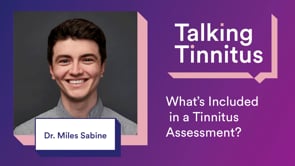
In this tinnitus talk on Talking Tinnitus, Dr. Miles Sabine, a tinnitus expert at Tobias & Battite Hearing Wellness in Boston, explains exactly what happens during a tinnitus consultation. Dr. Sabine also explains why a tinnitus consultation with an audiologist is the best first step toward tinnitus relief.
- 1. Why Start with a Tinnitus Assessment?
- 2. What Happens During a Tinnitus Consultation?
- 3. How Long Does a Tinnitus Evaluation Take?
- 4. Is a Tinnitus Evaluation The First Step Towards Treatment?
- 5. Best Tinnitus Treatment Options
1. Why Start with a Tinnitus Assessment?
Many people wonder whether they should jump straight into tinnitus treatment. Dr. Sabine explains that the first step is always a comprehensive tinnitus evaluation. This is because tinnitus can have multiple causes.
“Tinnitus can be caused by many things, but it can also be influenced, for better or worse, by a lot of factors—medications, neck tension, TMJ issues, or even recent major medical events. Understanding the whole picture is key.”
This is why a comprehensive tinnitus assessment doesn’t just focus on your ears—it looks at your overall health, hearing status, and lifestyle factors. Understanding the full picture helps an audiologist decide the best tinnitus treatment options for you.
2. What Happens During a Tinnitus Consultation
When you visit an audiology practice for tinnitus, here’s what you can expect:
Intake Tinnitus Questionnaire
You’ll answer general health questions and tinnitus-specific details, like when it started and how it affects your daily life. Dr. Sabine emphasizes the importance of this step:
“It’s really important to do the intake paperwork up front because it helps us make the best clinical judgment for you.”
Tinnitus Assessment and Hearing Test
As part of an audiologist tinnitus evaluation, patients undergo a hearing test. A tinnitus hearing test checks for hearing loss or auditory system changes.
“Hearing can change over time,” Dr. Sabine explains. “Sometimes that tiny bit of change is the last feather, and then tinnitus shows up or becomes more bothersome.”
Understanding if there is an underlying medical cause is part of the tinnitus medical assessment process. This is vital for clinicians to make recommendations.
In-Depth Tinnitus Discussion
Tinnitus patients have a detailed conversation with the audiologist about your tinnitus symptoms, causes of tinnitus diagnosis, and how it impacts your quality of life.
Tinnitus Assessment Next Steps
Based on the tinnitus diagnosis, you may receive:
- Educational guidance to manage mild tinnitus. These would include lifestyle and mindfulness techniques to control your response to tinnitus.
- A treatment plan if a patient has bothersome tinnitus. Keep reading for tinnitus treatment options and how to manage tinnitus after evaluation.
- Reassurance that nothing serious is causing the tinnitus. This may occur in the event that you have transient tinnitus. Transient or temporary tinnitus can occur as a result of loud noise exposure or earwax build up, for example.
According to Dr. Sabine, many patients leave with peace of mind just knowing what’s happening.
“Sometimes just the information and that baseline hearing test is all that someone needs to manage it effectively themselves—or simply feel reassured that they’re not the only one with this,” says Dr. Sabine.
3. How Long Does a Tinnitus Evaluation Take?
Time can vary depending on whether you already have a recent hearing test:
- With a hearing test: Around 90 minutes.
- Without a hearing test: 45 minutes – 60 minutes
Times at different practices and with different patients may vary. The goal is to give patients enough time to discuss concerns and options thoroughly.
4. Is a Tinnitus Assessment the First Step Towards Tinnitus Treatment?
Absolutely. A tinnitus assessment is the first step towards tinnitus treatment. A tinnitus assessment helps determine whether you need:
- Simple reassurance and education.
- A personalized tinnitus management plan that can include one of the treatments below.
- Referrals for other medical evaluations.
Dr. Sabine emphasizes the importance of seeing a qualified specialist:
“If you have questions or you’re serious about seeking treatment because tinnitus is bothersome, start with a tinnitus expert. A trained provider will make the best call for you.”

5. Best Tinnitus Treatment Options
As mentioned in the Is Tinnitus Treatable? episode of Talking Tinnitus, there are proven methods and treatments that can help you get relief.
a. Tinnitus Retraining Therapy (TRT)
TRT combines counseling with low-level sound therapy for tinnitus to help your brain gradually ignore tinnitus signals.
b. Cognitive Behavioral Therapy for Tinnitus
Cognitive behavioral therapy for tinnitus helps patients manage their response to tinnitus. This in turn can build better coping skills and help patients manage anxiety-induced tinnitus.
c. Bimodal Neuromodulation
Lenire is the only commercially available bimodal neuromodulation tinnitus treatment device.
The United States of America FDA granted Lenire De Novo Approval. This De Novo Grant made Lenre the first and only FDA Approved bimodal stimulation tinnitus treatment device.
Lenire bimodal stimulation combines custom audio through Bluetooth headphones with mild pulses to the surface of the tongue using a small intra-oral Tonguetip.
This approach has been proven to provide relief from tinnitus in clinical trials and with real world patients. Lenire’s large-scale clinical trials and real world evidence have been peer-reviewed and published in top-tier medical journals.
d. Hearing Aids for Tinnitus
Hearing loss is the most common cause of tinnitus. Tinnitus treatment with hearing aids can help restore hearing and reduce the perception of ringing.
What’s in a Tinnitus Assessment? Key Takeaway
Prior to trying a “tinnitus cure” that isn’t backed by science, schedule a tinnitus evaluation with a certified audiologist. They will help you understand your tinnitus and decide the next steps.
Dr. Miles Sabine and Dr. Fligor at Tobias & Battite Hearing Wellness in Boston are tinnitus experts and are ready to help you with your tinnitus. Not living near Boston? You can find the best tinnitus specialists for treatment near you using the Find a Tinnitus Clinic Map.