Why Does My Tinnitus Sound Different? Tinnitus Sounds and Causes – Tinnitus Talk with Dr. Melissa Wikoff

If you’ve ever wondered why your tinnitus sounds different from someone else’s, you’re not alone.
One person may hear a faint ringing in the ears, while another hears buzzing, clicking, or chirping. So why do tinnitus sounds vary so widely—and what does it mean for treatment?
Dr. Melissa Wikoff, owner of Peachtree Hearing in Atlanta, joined Talking Tinnitus to explore the unique nature of tinnitus, what it can sound like, how to make sense of your personal experience.
- What is Tinnitus?
- What Causes Tinnitus?
- Types of Tinnitus
- What Does Tinnitus Sound Like?
- Tinnitus Sound Changes
- Best Tinnitus Treatments
1. What is Tinnitus?
Tinnitus is the perception of sound without any external source. It can manifest as ringing, hissing, buzzing, whooshing, or even musical tones. Many people will experience tinnitus after a concert or other loud noise exposure.
- Advice: If tinnitus persisted for longer than 24-hours, you should seek help for tinnitus.
While the majority of people experience tinnitus mildly, for others it can be a persistent and disruptive part of daily life. Tinnitus affects 15% of the global adult population. According to the American Tinnitus Association, more than 50 million Americans live with tinnitus.
“Anything that you hear that someone else doesn’t hear is tinnitus,” says Dr. Wikoff. “A buzzing, a clicking, a humming, a beeping, a chirping—whatever it is, it counts.”
2. What Causes Tinnitus?
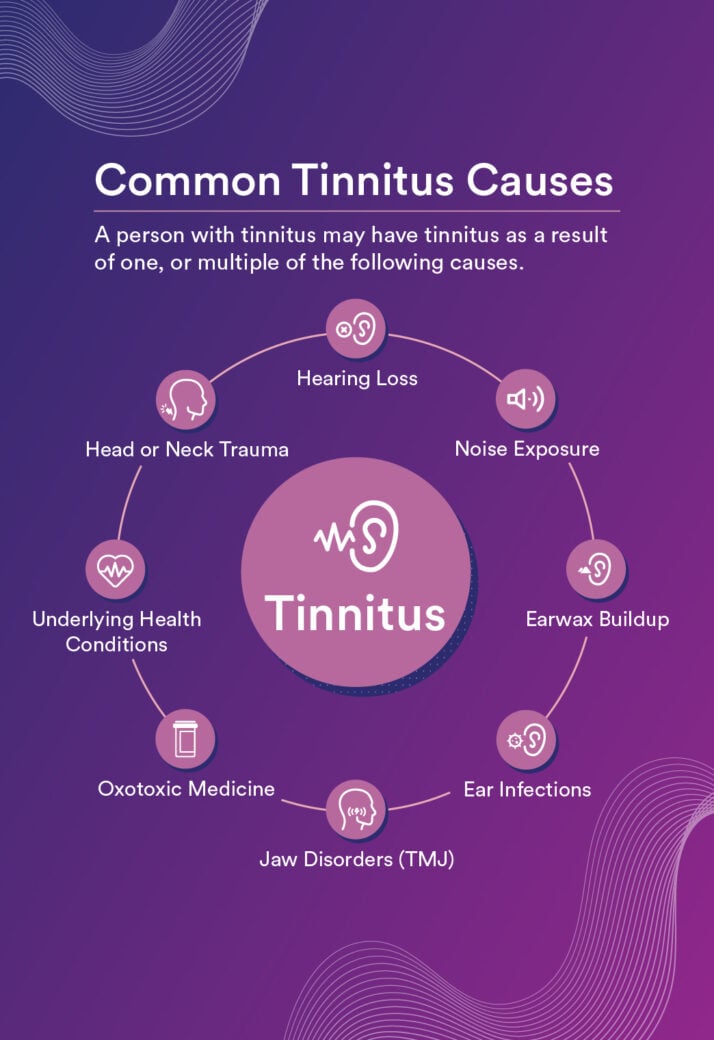
There are many potential causes of tinnitus, and they can differ from one person to another:
- Hearing loss is the number one cause of tinnitus.
- Noise exposure is another high contributing cause of tinnitus. The good news is, noise exposure is the most preventable cause of tinnitus.
- Stress or anxiety can cause or exacerbate tinnitus.
- Medications (ototoxic drugs)
- Ear infections or wax buildup blockages can impact the hearing system leading to higher perception of tinnitus. Ear infections can have adverse effects on tinnitus. Earwax blockages are a little bit more straightforward to resolve as removing the earwax safely often resolves the issue.
“Do you have normal hearing? Do you have some hearing loss? Are you under a large amount of stress? Are you well hydrated? Deprived of any nutrients?” Dr. Wikoff explains. “We look at this with a holistic approach of what’s going on in your body.”
Because tinnitus is a symptom rather than a condition, understanding the underlying cause is essential for effective management.
3. Types of Tinnitus?
Broadly speaking, there are two types of tinnitus:
- Subjective Tinnitus is the most common form of tinnitus accounting for 99% of all cases. Subjective tinnitus can only be heard by the person experiencing the tinnitus.
- Objective Tinnitus is a rare form of tinnitus that may be hearable and measurable by a doctor. Objective tinnitus is often linked to a physical condition such as
Regardless of type, people experience a wide range of tinnitus sounds, which can influence how bothersome the condition feels.
4. What Does Tinnitus Sound Like? Different Tinnitus Sounds
Tinnitus doesn’t sound the same for everyone. While many people describe it as ringing in the ears, others experience entirely different noises.
The variety of tinnitus sounds can be surprising, and understanding them can help individuals feel less alone and more prepared to seek help.
Common Descriptions of Tinnitus Sounds
- Ringing in the ears – A high-pitched tone, often compared to a tea kettle or amplifier feedback.
- Buzzing in the ears – Like an electric current or humming refrigerator.
- Hissing in the ears – A gas leak or steam escaping from a pipe.
- Clicking in the ears – Rapid, repetitive clicking sounds similar to a mechanical keyboard.
- Pulsing in the ears – A rhythmic sound that beats with your heartbeat (pulsatile tinnitus).
- Chirping in the ears – Like crickets or digital beeps.
- Whooshing in the ears – A wave-like or wind-in-the-ear sensation that can also be linked to pulsatile tinnitus.
- Musical hallucination – An exceptionally rare form of tinnitus that sounds like music being played when there is no source. You can learn more about it over on Tinnitus UK.
“A buzzing, a clicking, a humming, a beeping, a chirping—anything that you hear that someone else doesn’t hear is tinnitus,” explains Dr. Melissa Wikoff.
5. Tinnitus Sound Changes Tone or Pitch
These sounds can be constant or intermittent and may shift in pitch or volume depending on stress, fatigue, or environment.
Whether your tinnitus is loud or faint, sharp or soft, it’s important to remember: every case is unique, and no sound is too unusual to be taken seriously.
“Why does my tinnitus bother me differently than his tinnitus bothers him?” says Dr. Wikoff. “What’s going on in your brain and your body is so unique to anyone else out there.”
Your tinnitus sound might:
- Be more noticeable at night
- Fluctuate with stress or fatigue
- Appear as a constant ring or come and go
- Fluctuate while undergoing tinnitus treatment (approximately 10% of patients experience this)
- And that’s completely normal.
“Just like your sound is unique, your treatment and our approach to this will be different for anyone that walks in the door,” Dr. Wikoff adds.
6. Best Tinnitus Treatments
The best tinnitus treatments are individualized. What works for one person may not work for another. That’s why finding a certified tinnitus expert is essential.

Best Tinnitus Treatment Options
Tinnitus treatment begins with getting a full tinnitus assessment from a qualified tinnitus expert. A tinnitus treatment expert might recommend:
- Cognitive Behavioral Therapy (CBT) helps you manage your emotional response to tinnitus. CBT is also beneficial in developing strategies to cope with tinnitus fluctuations.
- Lenire Bimodal Neuromodulation is the first and only bimodal neuromodulation tinnitus treatment device approved by the US FDA. Lenire’s bimodal stimulation combines auditory stimulation with mild pulses in the tongue to retrain the brain to stop focusing on tinnitus. Lenire is used at home following an assessment from a qualified Lenire Provider.
- Sound Therapy can mask or reduce the perception of tinnitus sounds. This is most often someone used as part of a hearing aid feature. Alternatively, a person with tinnitus may listen to the radio or a podcast to mask tinnitus as a sleep aid.
- Tinnitus Retraining Therapy (TRT) – A combination of counseling with sound therapy.
- Hearing Aids – If you have hearing loss and tinnitus, restoring your hearing can help decrease your tinnitus perception. Lenire can also add additional benefit for people who have used hearing aids to treat tinnitus.
- Lifestyle Adjustments – Therapy such as cognitive behavioral therapy of tinnitus retraining therapy can help you manage stress. Developing a rigid sleeping routine, reducing the intake of caffeine and alcohol, and practicing mindfulness can help relieve tinnitus.
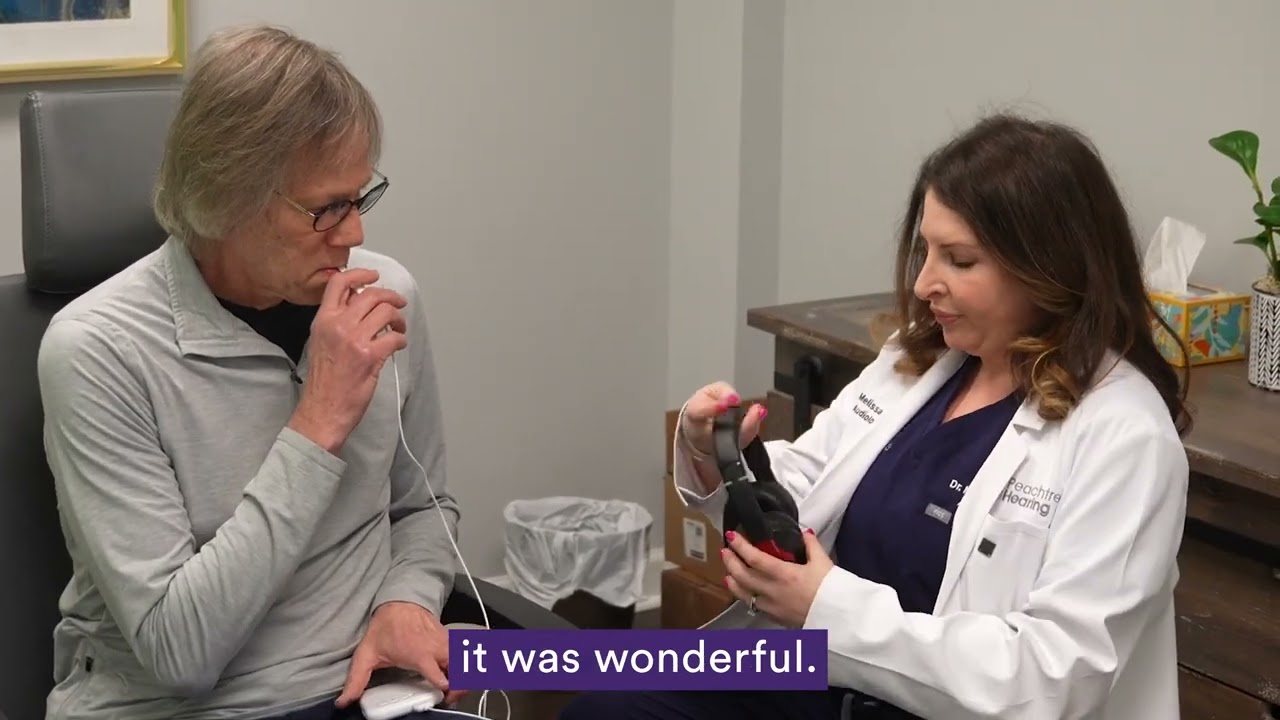
“Find a tinnitus expert. You’ll come in, be assessed, and we’ll talk through how your tinnitus is presenting,” says Dr. Wikoff. “The treatment might be the same as someone else—or it might be different—but that’ll be the judgment of the expert.”
Why Does My Tinnitus Sound Different? | Key Takeaways:
- Everyone experiences tinnitus sounds differently. This is why it is so important to get a full tinnitus diagnosis from a tinnitus expert.
- Ringing in the ears, buzzing, or clicking are just some of the ways tinnitus can manifest.
- Causes of tinnitus may include hearing loss, stress, or lifestyle factors.
- Treatment begins with a full tinnitus assessment by a qualified tinnitus expert.
- The best tinnitus treatments address your unique experience and sound profile.
As with every episode of Talking Tinnitus, if you’re experiencing ringing, hissing buzzing or even musical tinnitus – speak to a tinnitus expert. They will be able to give you a full tinnitus diagnosis and make a tinnitus treatment recommendation.
Dr. Melissa Wikoff and her team at Peachtree Hearing in Atlanta, Georgia are ready to help you with your tinnitus. If you’re not living in Atlanta, don’t worry. You can find an expert tinnitus clinic near you using Lenire’s Find a Clinic Map.