Real World Evidence for Tinnitus vs Clinical Trial Evidence – Talking Tinnitus with Dr. Ross O’Neill

When considering any tinnitus treatment, it’s common to come across clinical trial or real world evidence claims. The best tinnitus treatments are evidence-based.
But what is the difference between clinical trial evidence and real world evidence? What do these terms really mean and why do they matter if you’re struggling with persistent ringing, buzzing, or whooshing?
Dr. Ross O’Neill, founder and CEO of Neuromod, joins Talking Tinnitus to discuss Real World Evidence vs Clinical Trial Evidence for Tinnitus Treatments. In this episode, Dr. O’Neill Dr. Ross O’Neill explains how real world evidence and clinical trial data each contribute to the development, trustworthiness and regulatory approval of tinnitus treatments.
What is Tinnitus?
Tinnitus is the perception of sound in the absence of an external source. It often presents as ringing in the ears, but for many, it may have different tinnitus sounds that include:
- Clicking in the ears
- Pulsing in the ears
- Hissing in the ears
- Buzzing in the ears
- Whooshing in the ears
- Music in the ears
Tinnitus affects 15% of the global adult population. According to the American Tinnitus Association, tinnitus affects 50 million Americans. 3.2 million US Veterans live with tinnitus making it the #1 service-connected disability since the Vietnam War.
Many people will experience short-term tinnitus after loud noise exposure at a concert or a long haul flight. However, tinnitus can be a long-term life altering condition.
What Are Common Tinnitus Causes?
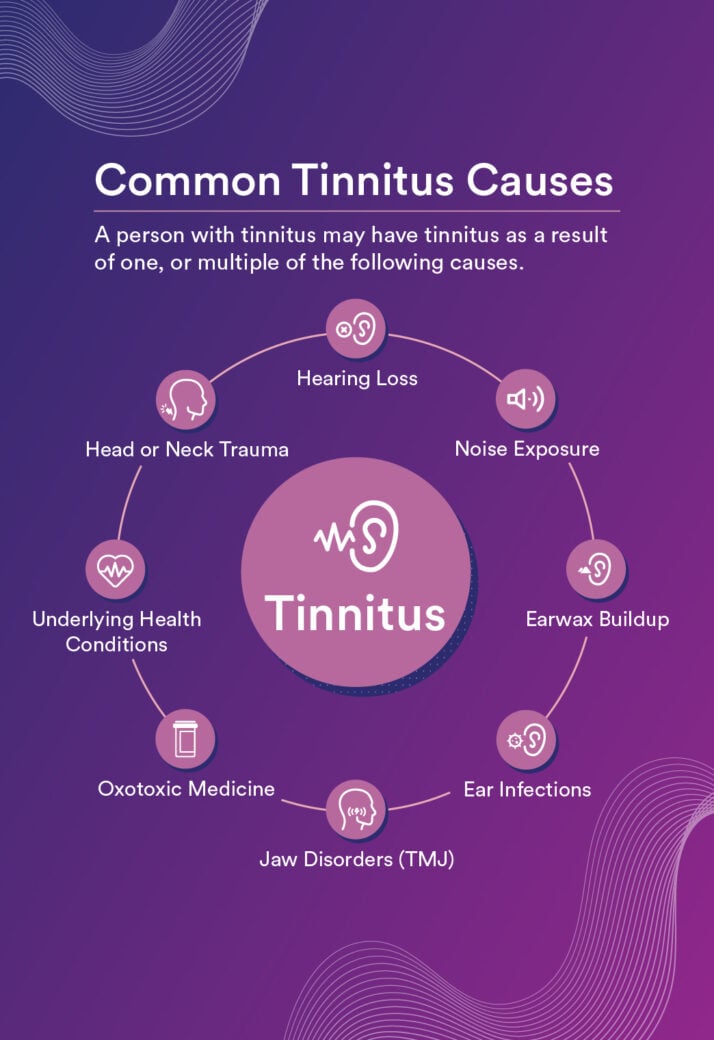
There are many causes of tinnitus. The most common causes of tinnitus include:
- Age-related hearing loss
- General hearing loss
- Loud noise exposure
- Earwax buildup or ear infections
- Certain medications (such as ototoxic drugs)
- Head or neck trauma linked to objective tinnitus
- Jaw disorders (TMJ)
- Underlying health conditions like high blood pressure
- Stress is linked to tinnitus fluctuation
- Anxiety can worsen tinnitus
As there are many types of tinnitus, and many causes of tinnitus, the importance of a tinnitus expert cannot be understated. The relationship between the tinnitus care provider can dramatically improve treatment outcomes.
To expand on this, Dr. Ross O’Neill explains the difference between clinical trials and real world evidence.

What are Clinical Trials?
Tinnitus clinical trials are highly controlled studies used to assess the safety and effectiveness of a treatment before it becomes publicly available.
“Normally when you are evaluating a new medical intervention or device like Lenire, you do it in a clinical trial,” explains Dr. O’Neill. “You want to determine the efficacy and safety of the product itself.”
These trials involve strict criteria for who can participate. The environment is tightly managed, and follow-up is scheduled at specific intervals to ensure consistency.
- Clinical Trials for Tinnitus Treatments: Learn more the clinical trial design of Lenire’s three large-scale clinical trials.
“In a clinical trial, you want every patient to follow the very same protocol, so you can answer a specific question,” says Dr. O’Neill.
Unlike clinical trials, there are far more variables when a treatment intervention is made available to the public. Evidence capture with real world patients is called real world evidence.
What is Real World Evidence?
Tinnitus real world evidence to data collected after a treatment becomes available and is used in everyday clinical settings. Unlike the rigid structure of clinical trials, real world evidence reflects how the treatment performs in daily life.
“You’re moving from that very controlled environment out into the wilds of clinical practice,” explains Dr. O’Neill. “You want to see if it performs as well in the real world as it does in clinical trials.”
Real world data is critical for understanding how variables like different provider experiences, patient lifestyles, and less rigid protocols impact outcomes.
Why is Real World Evidence Important?
Real world evidence shows whether a clinically proven tinnitus treatment remains safe and effective once it’s in the hands of real patients.
“What the regulators like the FDA want to know is: how do real world factors affect performance? Most importantly, does the product continue to be effective and safe?” says Dr. O’Neill
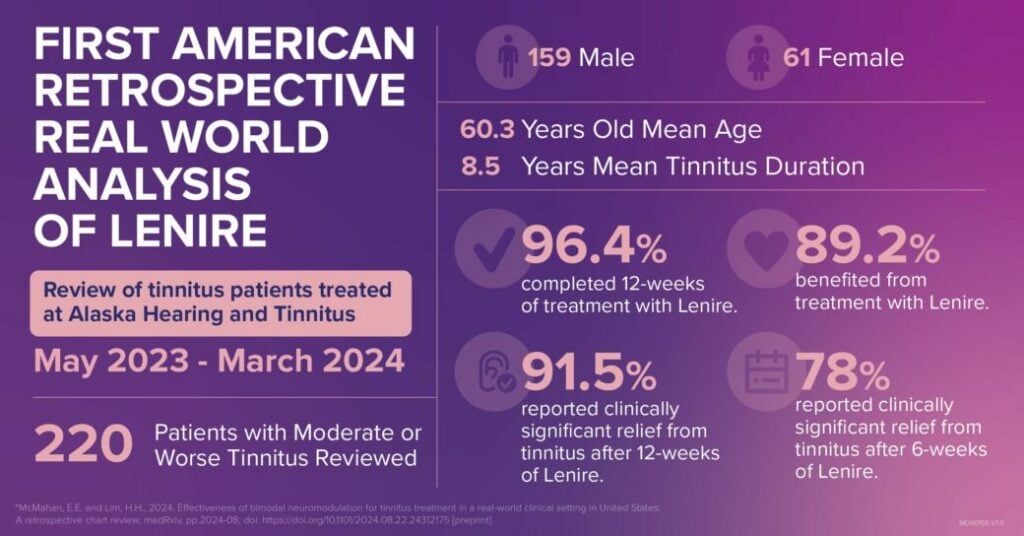
It also builds long-term confidence in treatments. Nature Communications Medicine recently peer-reviewed and published tinnitus real patient evidence from 220 U.S. patients using Lenire.
“We’re on a mission to build the largest body of real world evidence ever seen behind a tinnitus intervention,” Dr. O’Neill shares.

How Does Real World Evidence Differ from Clinical Trial Evidence?
| Clinical Trials | Real World Evidence |
| Controlled setting with strict patient criteria | Broad, real-life settings with diverse patient groups |
| Fixed treatment protocols and follow-ups | Flexible, varied timing based on patient/provider availability |
| Limited term and standardized | Long-term and observational |
| Answers questions about safety/efficacy under ideal conditions | Answers questions about performance in daily practice |
Both types of evidence play vital roles. Clinical trials help ensure that treatments are safe, effective and gain approval. Real world data ensures treatments keep working and stay safe after when they are commercially available.
“People have jobs, lives, and families. In real world care, things don’t always go perfectly on schedule—but that’s the point. The treatment needs to work in that reality too,” says Dr. O’Neill.
Real world evidence also allows manufacturers and healthcare professionals to refine clinical best practices. This is particularly true with tinnitus patients with subjective needs.
Lenire is Effective in Clinical Trials and the Real World
Lenire is a bimodal neuromodulation tinnitus treatment device. It is the first and only FDA Approved tinnitus treatment device.
- What is bimodal neuromodulation? Watch Dr. Ross O’Neill explain what bimodal neuromodulation is and how it works to treat tinnitus on Talking Tinnitus.
Neuromod, creators of Lenire, conducted a controlled clinical trial and included real world evidence as part of the device’s De Novo FDA Approval process,
Both clinical trial and real world evidence supports Lenire as an effective tinnitus treatment.
- TENT-A1 Clinical Trial: 80% of patients experienced a significant reduction in tinnitus severity that lasted at least 12 months. This clinical trial was the cover story in Science Translational Medicine.
- TENT‑A2 Clinical Trial: 91% of TENT-A2 participants had relief that sustained for at least 12-months. Nature – Scientific Reports peer-reviewed and published TENT-A2.
- TENT-A3 Controlled Tinnitus Clinical Trial: 70% of patients with moderate or worse tinnitus reported clinically meaningful relief from tinnitus with Lenire, compared with negligible improvement from sound-therapy, the trial’s control. TENT–A3 was a controlled clinical trial for Lenire that was designed with guidance from the US FDA. Nature Communications peer-reviewed and published TENT-A3.
- Peer Reviewed Real World Data: 91.5% of 220 patients reported significant relief from tinnitus. Nature Communications Medicine peer-reviewed and published this real world evidence.
Lenire is available through Lenire-certified hearing care professionals in the United States of America and Europe. Tinnitus patients use Lenire at home for two 30-minute sessions per day.
The device works through stimulation of the auditory and somatosensory nerves. Proprietary audio plays via Bluetooth headphones to stimulate the auditory nerve combined with mild pulses to the surface of the tongue using a small intra-oral Tonguetip.
Real World Evidence vs Clinical Trial Evidence for Tinnitus Treatments | Key Takeaways:
- Tinnitus clinical trials test safety and effectiveness under controlled conditions.
- Real world evidence shows how treatments perform in everyday life.
- Clinical trials and real world evidence build trust in tinnitus treatments.
- Tinnitus real patient evidence adds depth and confidence to scientific findings.
- Clinicians and regulators use real world data to ensure ongoing safety and success.
As with every episode of Talking Tinnitus, we recommend you seek help from a qualified tinnitus expert before trying any treatment.
A tinnitus specialist will help you understand your tinnitus through an in-depth tinnitus assessment. They will then be able to make a tinnitus treatment recommendation that is right for you.
You can find an expert tinnitus clinic near you using Lenire’s Find a Clinic Map.