Hearing Loss and Tinnitus: Expert Insights from Dr. Gail Whitelaw on Talking Tinnitus

Tinnitus, often described as ringing or buzzing in the ears, is a condition that affects millions worldwide. It’s closely associated with hearing loss, but not everyone with tinnitus has measurable hearing loss on a standard hearing test.
So, what are the best tinnitus treatment options, and how do hearing aids for tinnitus fit into the picture?
Dr. Gail Whitelaw joined Talking Tinnitus to discuss Hearing Loss and Tinnitus. Dr. Gail Whitelaw is the Director of the Speech-Language-Hearing Clinic at Ohio State University and Past President of the American Academy of Audiology.
On this episode, Dr. Whitelaw shared her expertise about the relationship between tinnitus and hearing loss and how patients can find the right treatment path.
- 1. What is Tinnitus
- 2. Common Tinnitus Issues
- 3. Common Causes of Tinnitus
- 4. Connection Between Hearing Loss and Tinnitus
- 5. Dr. Whitelaw’s Three-Pronged Approach to Tinnitus
- 6. Why Shared Decision-Making Improves Tinnitus Outcomes
1. What is Tinnitus?
Tinnitus is a condition where a person hears persistent ringing, buzzing, hissing, or whooshing in the ears without an external source of sound. Millions of people live with tinnitus worldwide. In fact, it is estimated that 15% of the global adult population
The main subcategories are objective tinnitus and subjective tinnitus.
- Objective Tinnitus is a rare type of tinnitus that your doctor can measure during an exam.
- Subjective Tinnitus is the most common type of tinnitus, accounting for 99% of cases. Only the person with tinnitus can hear and, as a result, there is no objective measure of this type.
Many people will experience transient tinnitus after loud noise exposure. This is often
“ringing in the ears” tinnitus. Transient tinnitus typically goes away after a few days for most people. For others, tinnitus can be a permanent, life-changing condition.
2. Common Tinnitus Issues
On the Common Tinnitus Issues episode of Talking Tinnitus, Dr. Gail. Brenner highlights that tinnitus can signficantly impact a person’s overall quality of life.
“We see tinnitus patients who tend to want to isolate, who have lost that zeal for life,” says Dr. Gail Brenner. Beyond the irritation of tinnitus, the condition can cause many emotional and mental health issues that include:
- Difficulty sleeping
- Anxiety
- Reduced concentration / focus
- Performance issues at work
- Increased anxiety and irritability
- Depression
- Social withdrawal
- Loss of agency
3. Common Causes of Tinnitus
There are many causes of tinnitus. The most causes of tinnitus, include:
- Age-related hearing loss
- Prolonged exposure to loud noise
- Ear infections or wax blockages
- Certain medications (known as ototoxic drugs)
- Head or neck trauma
- Jaw disorders (TMJ)
- Underlying health conditions like high blood pressure
4. Connection Between Hearing Loss and Tinnitus
While hearing loss is considered the leading cause of tinnitus, Dr. Whitelaw explains that, in her practice, it is often more complex:
“Historically we think tinnitus was caused by hearing loss… However, in my practice, I probably see at least 40–50% of people who don’t have hearing loss on an audiogram.”
Some patients may have hidden hearing loss in very high frequencies that standard tests don’t measure. Others may develop tinnitus after a head injury, car accident, or other medical event.
This means that tinnitus treatment must be tailored to the individual—not just assumed to be a direct result of hearing loss.
5. Dr. Whitelaw’s Three Pronged Approach to Tinnitus
Following an in-depth tinnitus assessment, Dr. Whitelaw explores three options as an approach for tinnitus patients with hearing loss.
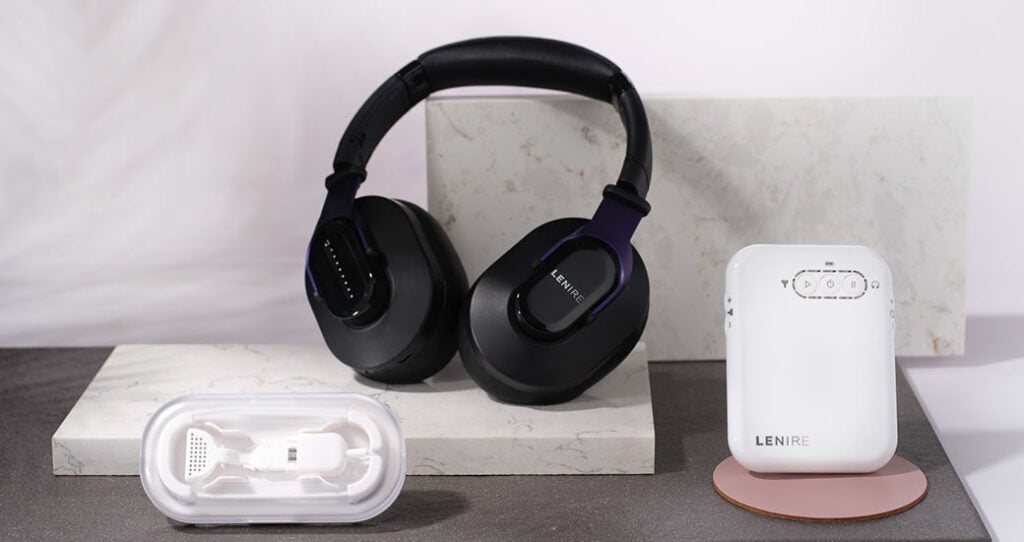
Bimodal Neuromodulation with Lenire
Lenire is the first and only FDA Approved bimodal neuromodulation tinnitus treatment device.
Lenire combines audio stimulation via Bluetooth headphones with mild pulses to the surface of the tongue using a small intra-oral Tonguetip.
This approach has been proven to provide relief from tinnitus in clinical trials and with real world patients.
Hearing Aids for Tinnitus Relief
Many patients, particularly those without noticeable hearing loss, will explore other options, like bimodal neuromodulation, before hearing aids.
Following a hearing test for tinnitus, you might consider hearing aids. Dr. Whitelaw stresses that a properly fitted hearing aid is essential.
“The best fit hearing aid for a patient with tinnitus has to be fit well. It’s not just slapping it on and saying, ‘Good luck.’ You should ask if they use real-ear verification.”
Dr. Whitelaw outlines that a hearing aid can be beneficial to restore hearing and that, in turn, can reduce tinnitus perception.
“For a lot of patients, hearing aids kind of kill two birds with one stone. It helps with habituating tinnitus, and many hearing aids nowadays have tinnitus programs built in.”
Cognitive Behavioral Therapy
Cognitive behavioral therapy (CBT) can help tinnitus patients manage the emotional impact of tinnitus.
“Most people with communication issues—whether tinnitus, balance disorders, or hearing loss—are going to need some kind of mental health support.”
6. Why Shared Decision-Making Improves Tinnitus Treatment Outcomes
Every patient’s journey is different. Some may need hearing aids, others may want Lenire, and some may focus on counseling first.
Dr. Whitelaw highlights the importance of helping patients understand their options:
“When patients are involved in the decision, the outcomes are so much better. Some may not want hearing aids because of stigma. They may prefer something like Lenire, where they can do it for an hour a day and see if they get relief.”
By involving patients in the decision-making process, they are more likely to commit to the treatment tinnitus treatment plan and see positive results.
Hearing Loss and Tinnitus | Key Takeaways
Not all tinnitus patients have measurable hearing loss, but for those who do, hearing aids can address both hearing and tinnitus.
- Sound therapy for tinnitus can help patients mask the perception of tinnitus.
- Lenire bimodal neuromodulation is a clinically proven option for those who want relief from tinnitus and do not have hearing aids. Bimodal can also benefit patients with hearing aids.
- Hearing aids for tinnitus with sound masking programs must be fitted properly for maximum benefit.
- Cognitive behavioral therapy for tinnitus offers mental health support and patient education which can have long-term tinnitus relief.
- Involving patients in the tinnitus treatment plan decision process benefits tinnitus treatment outcomes.
The most important first step for anyone experiencing tinnitus is to book a tinnitus assessment. You can have a detailed conversation with the audiologist about your tinnitus symptoms, causes of tinnitus diagnosis and hearing loss, and how it impacts your quality of life.
Dr. Whitelaw and her team at Speech-Language-Hearing Clinic at Ohio State University are here to help.
Not based near Ohio? You can find an audiologist with tinnitus expertise near you by visiting our Find a Clinic Map.